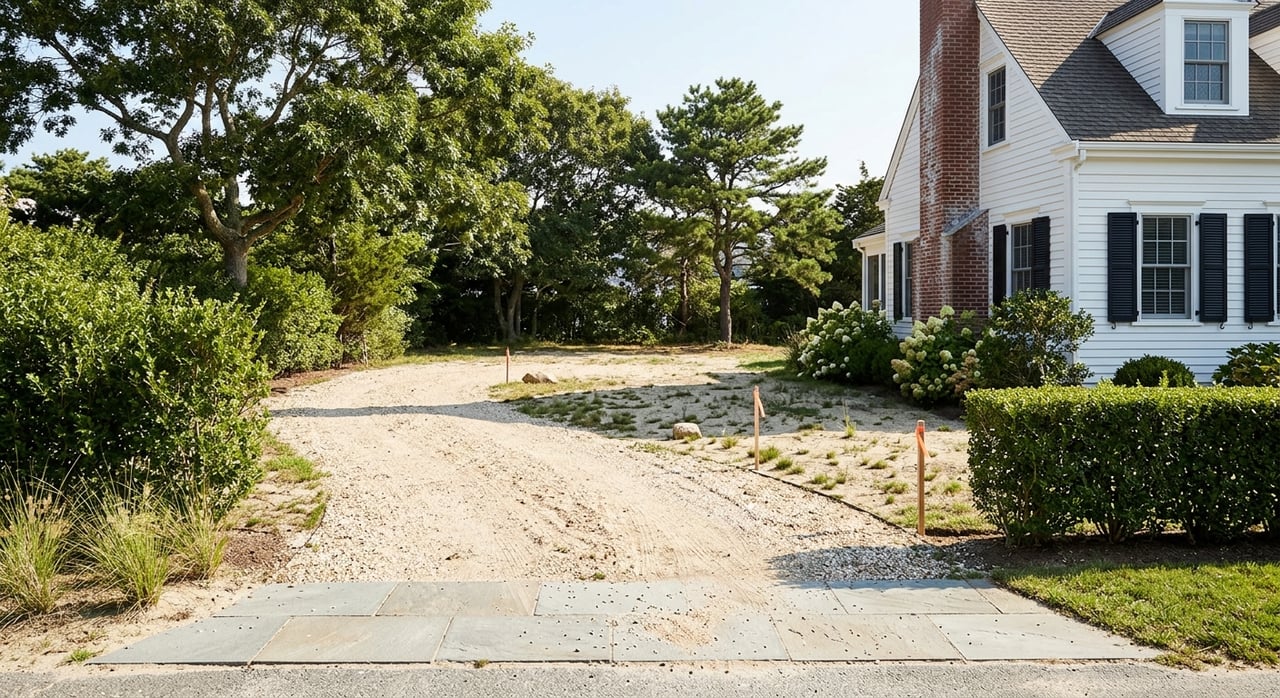
Guide to Buying Southold Land for a North Fork Retreat
April 23, 2026
April 23, 2026
Dreaming about a custom North Fork retreat? In Southold, buying land can open the door to a very special home, but only if the parcel can truly support what you want to build. Before you fall in love with acreage, water views, or a quiet setting, it helps to understand how zoning, wetlands, flood zones, and wastewater approvals can shape what is actually possible. If you are considering land in Southold, this guide will help you ask smarter questions and move forward with more confidence. Let’s dive in.
Southold offers a rare mix of open space, waterfront settings, and North Fork character that makes it appealing for a second home or custom retreat. At the same time, land purchases here are often more complex than buying an existing house.
One reason is that zoning should be treated as a moving target, not a one-time checkbox. The Town of Southold announced a proposed new Zoning Code and Zoning Map on April 23, 2025, while the currently posted official zoning reference remains Chapter 280. That means you should verify the adopted zoning text, map, and any overlays right before contract and again before filing an application.
The town’s Planning Department is a key resource during this process. It provides access to planning review information, GIS mapping, subdivision and site plan materials, and the interactive parcel map that can help you start evaluating a property.
The first question is not just how large the parcel is. The better question is whether the lot meets the zoning rules for the type of home you want to build.
Under Southold’s current zoning framework, residential districts include A-C, R-40, R-80, R-120, R-200, R-400, HD, RR, and RO, among others. For one-family detached dwellings in lower-density districts, minimum lot sizes can range from 40,000 square feet in R-40 to 400,000 square feet in R-400, according to the town’s zoning schedule. In some hamlet or resort districts, smaller minimums may apply where community water and sewer are available.
Minimum lot size is only the beginning. Southold’s residential bulk schedule also sets front, side, and rear yard requirements, height limits, and lot coverage caps. In many lower-density districts, one-family homes are generally limited to 35 feet to the peak of a sloping roof or 25 feet for flat or mansard roofs, and lot coverage may be capped at 20 percent, 10 percent, or even 5 percent depending on district.
A parcel can look generous on paper and still have a surprisingly small buildable envelope. This is especially true when zoning setbacks, buffers, and open-space requirements all apply at once.
For larger retreat-style properties, Southold’s residential site-plan open-space schedule adds another layer. Parcels under 15 acres require a 20 percent open-space set-aside, a 30-foot perimeter setback, and a 20-foot buffer. Parcels from 15 to 39 acres require 30 percent open space, a 35-foot setback, and a 25-foot buffer, while parcels over 39 acres require 50 percent open space, a 75-foot setback, and a 50-foot buffer.
If you are thinking about a main residence plus outdoor living areas, accessory structures, or a more expansive compound layout, these rules matter early. The practical takeaway is simple: what you can build depends on the remaining clean upland after every restriction is mapped onto the survey.
In Southold, environmental overlays are often the deciding factor. A property may satisfy zoning and still face major limitations because of wetlands jurisdiction.
Southold’s wetlands rules give the Board of Trustees jurisdiction over freshwater and tidal wetlands, creeks, estuaries, streams, ponds, canals, lakes, land under water, land subject to tidal action, and land within 100 feet of those features. Under the wetlands code, residential properties within Trustee jurisdiction must meet setback standards such as 100 feet from a wetland boundary for a residence, 50 feet for a driveway, 100 feet for a cesspool, 75 feet for a septic tank, and 60 feet for a swimming pool and related structures.
Those setbacks can significantly reduce where a house, driveway, septic system, or pool can go. On a waterfront or near-water parcel, this is often the difference between a workable concept and a frustrating redesign.
The town also notes that a pre-submission site visit and permit review process may involve multiple boards and departments depending on the proposal. In some cases, an expedited administrative permit review may be available for projects that meet current setbacks and do not threaten wetland function, but that still requires careful upfront analysis.
Many buyers are drawn to Southold for water access, water views, or a setting near the Sound or bay. These parcels can be exceptional, but they also tend to come with more regulation.
Under Southold’s coastal erosion and shoreline rules, buildings on bluff lots along the Sound and bay waters must be set back at least 100 feet from the top of bluff. Buildings on lots with bulkheads, concrete walls, riprap, or similar shoreline structures fronting tidal waters other than sounds must be set back at least 75 feet from the bulkhead. Buildings near freshwater bodies must be set back at least 75 feet from the water body or the landward edge of the freshwater wetland, whichever is greater.
If you are considering a waterfront parcel, the issue is often not just the house footprint. It is also what cannot be placed, expanded, or stabilized without additional permits, especially when shoreline work, docks, bulkheads, or similar coastal features are involved.
Even if a parcel clears zoning and wetland review, floodplain and wastewater issues can still affect feasibility, cost, and timeline. These are two areas where early diligence can save you time and money.
Southold’s flood damage prevention chapter applies to all special flood hazard areas in town and requires a floodplain development permit for development in those areas. The town’s building permit checklist also notes that applicants may need Suffolk County Department of Health Services approval, permits from the Southold Town Trustees for work within 100 feet of certain wetlands, and New York State DEC permits for work within 300 feet of a tidal wetland or 100 feet of a freshwater wetland.
On the wastewater side, Suffolk County’s Office of Wastewater Management says a new home requires a wastewater permit and recommends a pre-meeting with staff and a design professional. The county also notes that residential wastewater permits average about three months for approval, which is an important timeline factor if you are planning a build.
A smart land purchase starts with organized due diligence. Before relying on a listing description or seller assumptions, you want to confirm the parcel’s actual development potential.
A good public starting point is Southold’s resources through the Planning Department, including the interactive parcel map and development proposal materials. The town notes that searching by tax map number is often the easiest method, and Suffolk County maintains the official tax map for ad valorem purposes.
Here is a practical checklist to use when evaluating land in Southold:
Raw land in Southold is often a multi-agency project before it becomes a building site. That is why experienced professional guidance matters.
According to the town’s building permit application requirements, a permit application may require a survey or site plan drawn to scale, plans sealed by a New York State licensed engineer or architect, contractor insurance and license information, and approvals from agencies or boards as applicable. In practice, that often means you may need a surveyor, land-use attorney, architect, civil engineer, and wastewater design professional. On waterfront parcels, a wetlands or shoreline consultant may also be important.
If a parcel does not fully comply with zoning, the Zoning Board of Appeals is the forum for variance requests and certain special exceptions. The town states that hearings are calendared after a complete application is filed, and once a hearing is closed, the board has 62 days to issue a written decision, though many decisions are issued sooner.
Southold land can absolutely support a beautiful North Fork retreat, but it helps to approach the purchase with patience and precision. A land deal may involve zoning review, environmental analysis, septic design, agency coordination, and possibly variance work before construction can begin.
When those steps stack together, timelines can stretch. Suffolk County says wastewater permits average about three months, and local review can add more time depending on the parcel and proposal. If your goal is to build efficiently, the best strategy is to investigate thoroughly before contract terms become fixed.
The right parcel is not always the one with the biggest acreage or the most attractive listing language. It is the one that can realistically support your vision after zoning, setbacks, wetlands, floodplain, shoreline, and wastewater constraints are all accounted for.
If you are exploring Southold land for a North Fork retreat, having experienced guidance on the front end can make the process clearer and more strategic. Lauryn Koke offers a thoughtful, high-touch approach for buyers navigating distinctive Long Island properties, including land and second-home opportunities.
Stay up to date on the latest real estate trends.
Get assistance in determining current property value, crafting a competitive offer, writing and negotiating a contract, and much more. Contact me today.