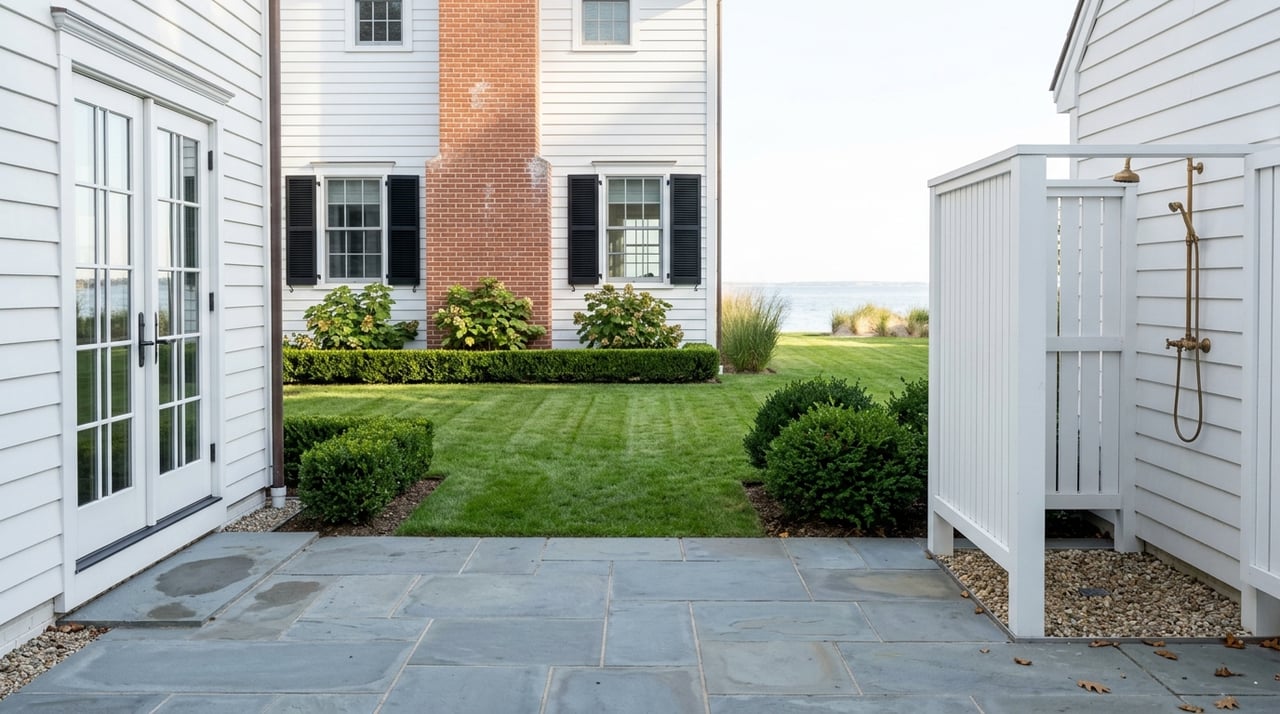
What to Know About Huntington Bay Beach Mooring Rights
July 2, 2026
July 2, 2026
Wondering whether a Huntington Bay waterfront home comes with beach access or a place to keep your boat? It is a smart question, because in this village, shoreline rights can vary a lot from one property to the next. If you are buying, selling, or simply planning ahead, understanding how beach and mooring rights work can help you avoid costly assumptions and ask better questions. Let’s dive in.
In Huntington Bay, shoreline rights are not one-size-fits-all. The village sits on Huntington Bay along Long Island’s North Shore, and those waters connect to Long Island Sound. That waterfront setting creates value and lifestyle appeal, but it also brings layers of ownership and regulation.
Under New York rules for tidal shoreline, the boundary between state underwater land and private upland is generally the mean high-water mark. The New York State Office of General Services also notes that a waterbody can include a mix of public and private ownership. In practical terms, that helps explain why two nearby waterfront properties may have very different rights.
The New York State Department of Environmental Conservation adds another important point. Public navigation and fishing rights on navigable waters can extend up to the ordinary high-water mark once a person has lawful access to the waterway. That does not mean the public can cross private land to get there.
If you are looking at a waterfront home in Huntington Bay, it is safest not to assume that private beach rights automatically come with the property. In many cases, access is driven by the deed, survey, easements, or membership in an association or beach club. Those rights can be very specific to the parcel.
Village code reinforces that limited, case-by-case structure. Huntington Bay allows a beach and bathing membership corporation for village residents only with Board of Zoning Appeals approval and only if the property meets strict conditions. Those conditions include a minimum lot size of 2 1/2 acres, at least 250 feet of water frontage, off-street parking, operation on a non-profit basis, and a membership cap of 100 village residents.
The village’s Waterfront Preservation Districts are also tightly limited, with uses centered on single-family dwellings and accessory structures. That matters because it signals that shoreline use is carefully controlled. A buyer should treat beach access as something to verify, not something to assume.
Before you count on private beach use, review the full paper trail. Key items include:
A property may be close to the water without including a legal right to use a private beach. In some cases, the right may exist but be limited by shared-use rules or membership terms.
One common point of confusion is the difference between using navigable water and crossing private land. In New York, lawful use of navigable waters does not create an automatic right to pass through someone else’s property to reach the shoreline. That distinction matters in Huntington Bay, where private waterfront parcels and public waterfront amenities may exist near each other.
For example, the Town of Huntington identifies Crescent Beach in Huntington Bay as one of its beach locations. The town states that seasonal beach permits are for residents only, are not transferable, and do not imply reserved parking. That is very different from a private beach right that may or may not attach to a specific home.
The Town also operates public docks in Halesite, where tie-up is limited to one hour, and provides recreational fishing access at Halesite Marina Park. These examples help show how town-controlled access differs from private deeded or association-based rights.
Mooring rights in Huntington Bay are layered. The Village has its own vessel rules, and the Town of Huntington has a separate permit system. If you are buying a waterfront home and hope to keep a boat on a mooring, both levels matter.
Under Huntington Bay’s Chapter 48, the Village created a Vessel Regulation Zone. In the Huntington Bay portion covered by that chapter, moorings are restricted to vessels owned by or registered to village residents, private clubs or homeowner associations that own waterfront property in that part of the Village, the members of those clubs or associations regardless of residency, and their guests.
The Village code also says a vessel may not be moored to a dock, wharf, pier, jetty, or other structure that is not physically attached to Village real property. That is an important detail for buyers evaluating existing waterfront improvements or possible future use.
Even though the Village regulates who may use moorings in certain areas, it does not issue a separate mooring permit or charge a Village mooring fee. Boaters still must comply with the Town of Huntington’s mooring permit requirement.
At the Town level, it is unlawful within 1,500 feet of the shorelines of incorporated villages to place a mooring on underwater land owned by the Town or the Board of Trustees without a mooring permit or transient mooring permit from the Department of Maritime Services. The Town also gives residents preference over non-residents. Yacht clubs, marinas, and boating associations may apply for members when authorized.
The Town’s current process states that mooring applications are handled online. For buyers and sellers, that means a claimed mooring setup should be confirmed with current Town records and rules, not just local word-of-mouth.
If you plan to add, rebuild, or modify a dock, the process can become more involved. Huntington Bay’s Building Department states that docks require building and grading permits. Depending on the location and ownership of underwater lands, additional approvals may also be required.
The Office of General Services says permission may be needed for docks, boathouses, or marinas on state-owned underwater lands. In addition, Huntington’s Local Waterfront Revitalization Plan requires a consistency review before certain Town permits or approvals can be granted in the coastal area. So if a property’s value to you depends on future dock work, that should be investigated early.
If you are shopping for waterfront property in Huntington Bay, the biggest takeaway is simple: treat beach and mooring rights as parcel-specific. A beautiful shoreline setting does not automatically mean you will have private beach access, a transferable mooring right, or easy approval for dock changes.
A smart due diligence plan usually includes confirming:
That level of review can help you compare waterfront homes more accurately. It can also protect you from overpaying for rights that were assumed but never documented.
If you own waterfront property in Huntington Bay, clear documentation can strengthen buyer confidence. When beach access, association rights, or mooring history are part of the property story, organized records can make the listing easier to understand and easier to market.
That may include having your survey, deed language, easement information, association documents, and permit history readily available for review. In higher-value waterfront sales, details matter. Buyers tend to move with more confidence when the facts are clear from the start.
Because these rights can be so specific, the safest assumption is that no shoreline privilege transfers unless the documents and permits clearly say it does. That is especially true in a village like Huntington Bay, where local code, Town permitting, and state shoreline rules all intersect.
For that reason, buyers should verify the survey, deed, easements, HOA or club rules, and permit history with counsel, Village Hall, and the Town Harbormaster before relying on any claimed beach or mooring right. Sellers can benefit from taking the same organized approach before going to market. A well-prepared file can reduce uncertainty and support a smoother transaction.
If you are weighing a waterfront purchase or preparing to sell a harborfront home, local detail matters. For tailored guidance on Huntington Bay and the North Shore waterfront market, connect with Lauryn Koke to request a complimentary, confidential home valuation.
Stay up to date on the latest real estate trends.






Get assistance in determining current property value, crafting a competitive offer, writing and negotiating a contract, and much more. Contact me today.